

Mortgage Preapproval vs Prequalification: What Homebuyers Need to Know
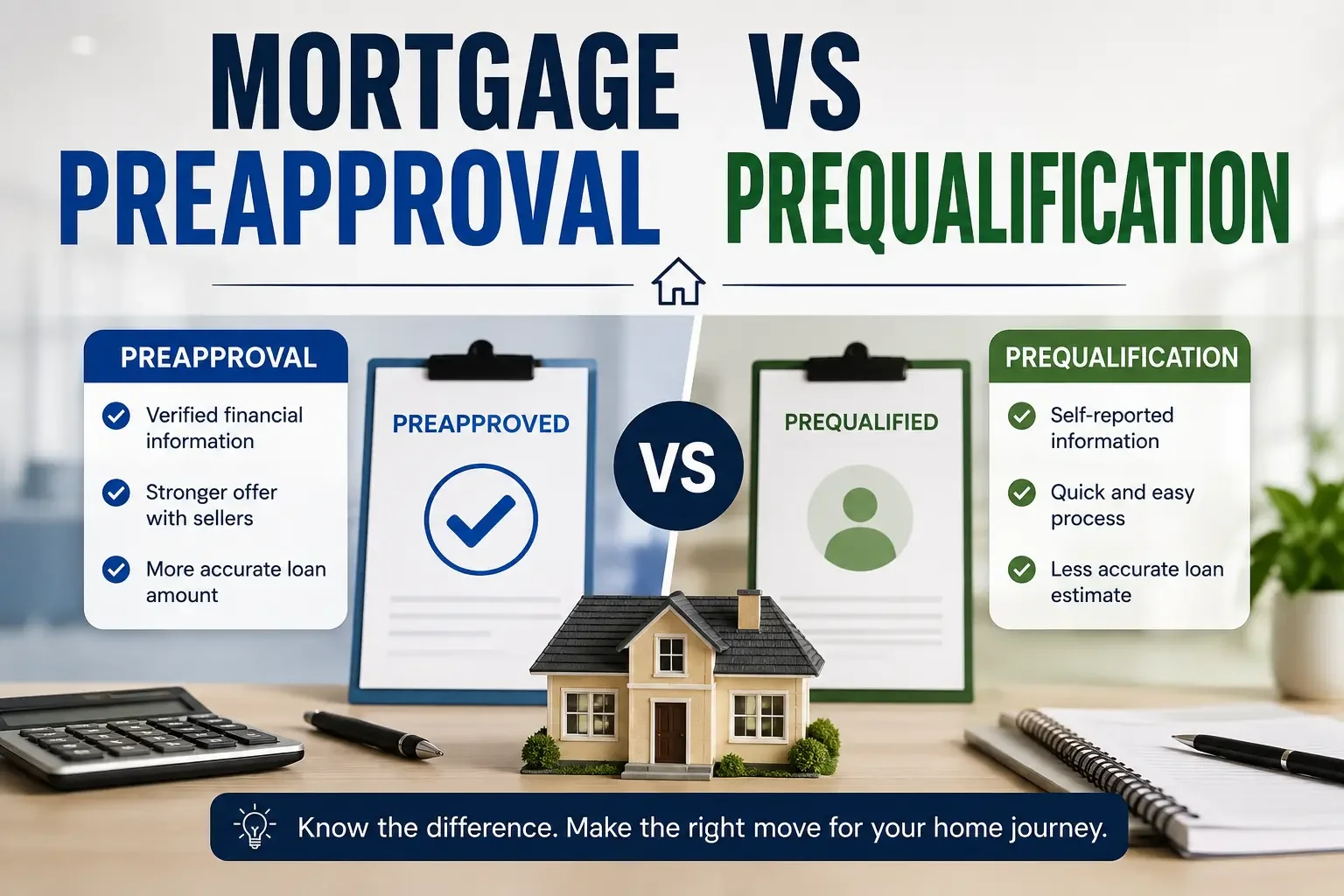
While prequalification and preapproval sound similar, they serve entirely different roles in the homebuying process. Prequalification offers a rough estimate of borrowing potential based on self-reported financial information without verification. In contrast, mortgage preapproval requires a rigorous underwriting evaluation, including verified tax records, pay stubs, and credit checks. Securing a formal preapproval strengthens home financing strategies, signals serious purchasing intent to sellers, and protects buyers against financing fallouts during active real estate transactions.
Introduction
Imagine spending weekends touring properties, falling in love with a home, and submitting an offer, only to watch the seller reject it instantly in favor of a competing bid. When questioned, the seller's agent gives a simple reason: the competing buyer possessed a verified preapproval letter, while the rejected offer carried only a basic prequalification snapshot.
This scenario plays out daily across competitive real estate markets. Many prospective buyers treat prequalification and preapproval as interchangeable steps in early planning. In reality, conflating these two stages can derail transactions, waste valuable time, and leave buyers unprepared for the realities of modern underwriting.
Navigating home financing requires knowing precisely where your financial profile stands before placing an offer. Understanding the functional differences between mortgage preapproval and prequalification empowers buyers to make confident moves and secure property transactions with minimal friction.
Defining the Baseline: What Is Prequalification?
Prequalification represents the initial exploratory phase of evaluating loan eligibility. It acts as an informal financial diagnostic designed to give buyers a baseline sense of what they might comfortably spend.
During a typical prequalification review, a buyer submits unverified financial figures to a lender or online portal. This data generally includes self-reported income, estimated savings, general debt obligations, and an approximate credit score tier.
The Mechanism of Prequalification
Because the lender does not pull tax transcripts, verify bank accounts, or independently audit pay stubs during prequalification, the resulting assessment remains strictly conditional.
Documentation required: None (self-reported numbers).
Credit evaluation: Optional soft credit inquiry (no impact on credit scores).
Speed: Completed online or over the phone within minutes.
Weight in negotiations: Minimal; sellers treat prequalification letters as unverified estimates.
Prequalification serves a distinct purpose for early-stage planners: it establishes a preliminary shopping budget. However, relying on prequalification to make formal offers introduces substantial operational risk, as unverified numbers frequently change once formal underwriting begins.
The Gold Standard: What Is Mortgage Preapproval?
A preapproval letter carries significantly more weight in real estate negotiations because it represents a rigorous, verified financial audit conducted by an underwriter.
Instead of relying on self-reported estimates, the lender collects comprehensive documentation to verify your employment history, tax records, assets, and liability obligations. The lender also executes a hard credit pull to review payment history, debt management, and active credit lines.
The Underwriting Standard
Once the file completes preliminary automated or manual underwriting, the lender issues a formal preapproval letter. This document confirms that a lender has committed conditional financing up to a specified loan cap, subject only to property appraisal and title search validation.
Documentation required: W-2 forms, tax returns, pay stubs, bank statements, and debt schedules.
Credit evaluation: Hard credit pull to verify credit history and scores.
Speed: Takes anywhere from 24 hours to several business days depending on document processing.
Weight in negotiations: High; demonstrates verified financial capability to sellers.
When real estate markets experience tight inventory or competitive offer scenarios, listing agents routinely prioritize offers backed by verified preapprovals. Industry resources like Mortgage Disrupters frequently note that submitting a fully underwritten preapproval letter bridges the credibility gap between buyers and cautious sellers.
Comparing Prequalification and Preapproval
To see how these two stages compare across key real estate parameters, consider their functional differences:
Information Verification: Prequalification relies entirely on self-reported estimates. Preapproval requires official documentation, including tax forms, bank records, and audited income statements.
Credit Review: Prequalification involves either no credit check or a soft credit inquiry. Preapproval requires a hard credit pull that factors directly into underwriting guidelines.
Seller Trust: Sellers view prequalification as an unverified interest check. Preapproval is viewed as a concrete, verified commitment to fund up to a designated cap.
Timeline to Issue: Prequalification can occur instantly. Preapproval requires thorough document processing, taking from 1 to 3 business days.
Why Timing Matters for Home Buyers
Securing preapproval early in your property search alters your strategy in several crucial ways.
Preventing Budgetary Surprises
Self-reported numbers often miss nuances that professional underwriters catch immediately. Student loan payment structures, variable commission income, undisclosed credit lines, or fluctuating business expense deductions can alter debt-to-income (DTI) calculations.
Completing preapproval upfront uncovers these variables before you fall in love with a property beyond your actual borrowing threshold.
Strengthening Negotiating Position
Sellers desire transaction certainty above almost everything else. A purchase contract falling apart mid-escrow due to denied financing costs sellers time, money, and market momentum.
When a seller reviews multiple offers, an offer backed by a comprehensive preapproval signals that the buyer has already cleared major financial hurdles. In multi-offer situations, sellers regularly accept slightly lower purchase prices from buyers with verified preapprovals over higher offers carrying unverified prequalifications.
Accelerating the Closing Timeline
Because the heavy lifting of income verification, asset auditing, and credit analysis occurs during preapproval, the final loan processing phase moves significantly faster once a sales contract is signed. The lender simply needs to verify property details through an appraisal and title check, reducing escrow timelines substantially.
Steps to Prepare for Full Preapproval
To ensure a smooth transition into the preapproval phase, proactive buyers take organized steps to prepare their financial file long before contacting a loan officer.
1. Assemble Core Documentation
Gather paper or digital copies of recent financial records. Underwriters typically request two years of personal and business tax returns, two years of W-2 or 1099 statements, 30 days of recent pay stubs, and two to three months of complete bank statement pages.
2. Audit Your Credit Profile
Obtain copies of your credit reports across major bureaus to check for inaccuracies or outdated collection items. Resolving minor reporting errors before an underwriter executes a hard credit pull helps preserve your credit score tier.
3. Freeze Major Credit Activity
Avoid opening new credit cards, financing automobiles, or transferring large balances in the months leading up to your home application. Changes in your overall credit balance or monthly liabilities alter your debt-to-income ratios and can void preapproval terms.
4. Track Asset Sources for Down Payments
Underwriters audit asset movements to ensure funds used for down payments and closing costs are fully documented. If receiving gift funds from family, ensure the transfer follows clear paper trails with proper gift letters rather than untraceable cash deposits.
Making Strategic Moves in Real Estate
Understanding the distinction between prequalification and preapproval transforms how you navigate real estate transactions. While prequalification offers a convenient entry point for general financial planning, it cannot substitute for the verified authority of a full preapproval letter.
By taking the time to compile documentation, audit debt profiles, and secure verified preapproval early, buyers move from passive window-shopping to active, competitive purchasing power.
FAQs
Q1 Will getting preapproved hurt my credit score?
A preapproval involves a hard credit inquiry, which may temporarily lower your credit score by a few points. However, credit scoring models typically group multiple mortgage inquiries made within a 14-to-45-day window into a single inquiry for calculation purposes.
Q2 How long does a mortgage preapproval letter remain valid?
Most mortgage preapproval letters remain valid for 60 to 90 days. Because financial records and interest rates change, lenders require updated pay stubs and bank statements to extend preapproval terms beyond that window.
Q3 Can a lender deny a loan after issuing a preapproval letter?
Yes. A preapproval is a conditional commitment. A loan can still be denied if your financial situation changes (such as taking on new debt or changing jobs), if the property fails to pass appraisal, or if title issues arise.
Q4 Does prequalification guarantee loan approval?
No. Prequalification is based solely on unverified, self-reported information and carries no guarantee or legal commitment from the lender to fund a mortgage loan.
Q5 Should I get preapproved before touring homes with an agent?
Yes. Most experienced real estate agents prefer working with preapproved buyers, as it confirms your true purchasing range and ensures you are ready to place a competitive offer when the right home opens up.